Danese · Tannery machinery
Less volume.
Robust construction.
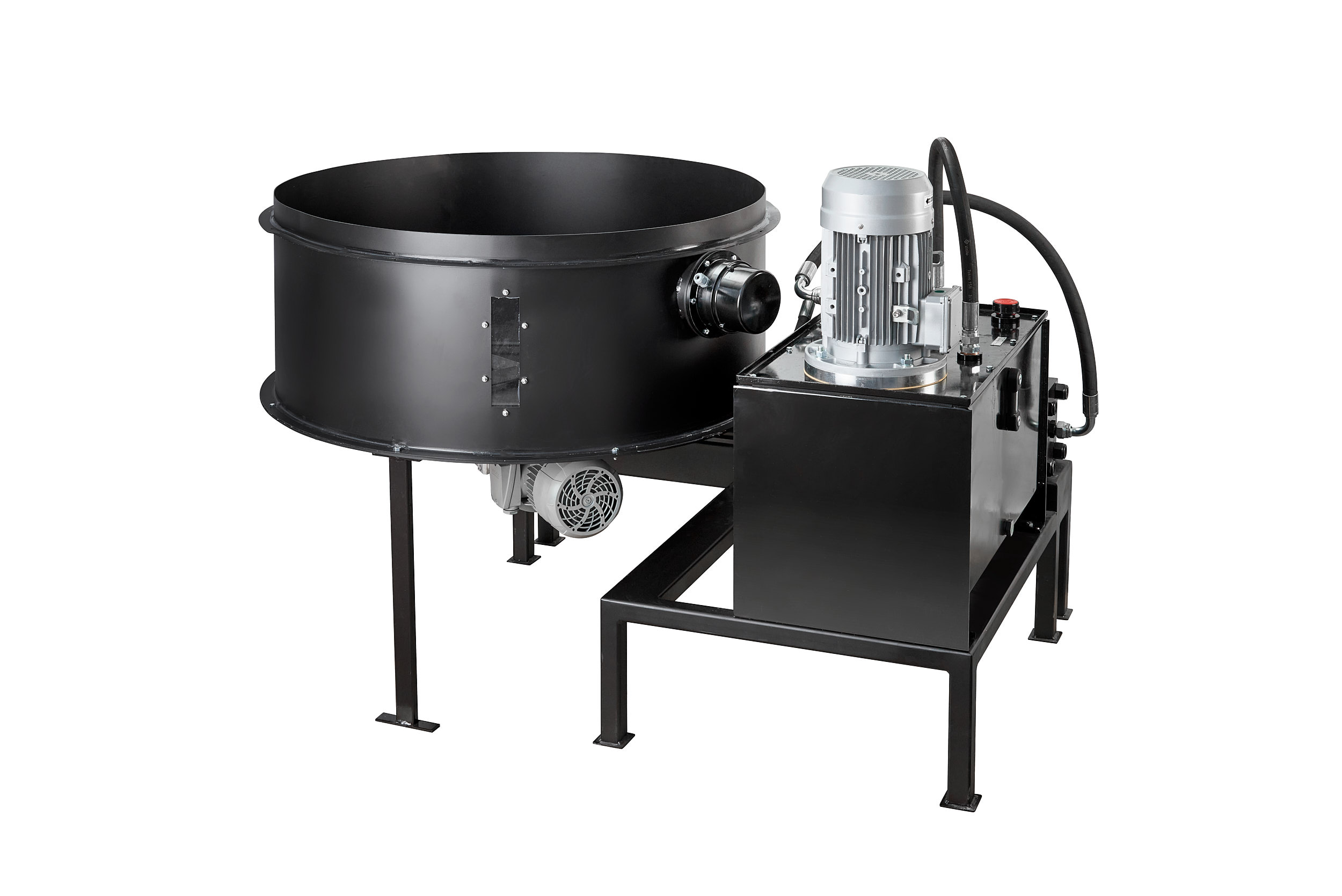
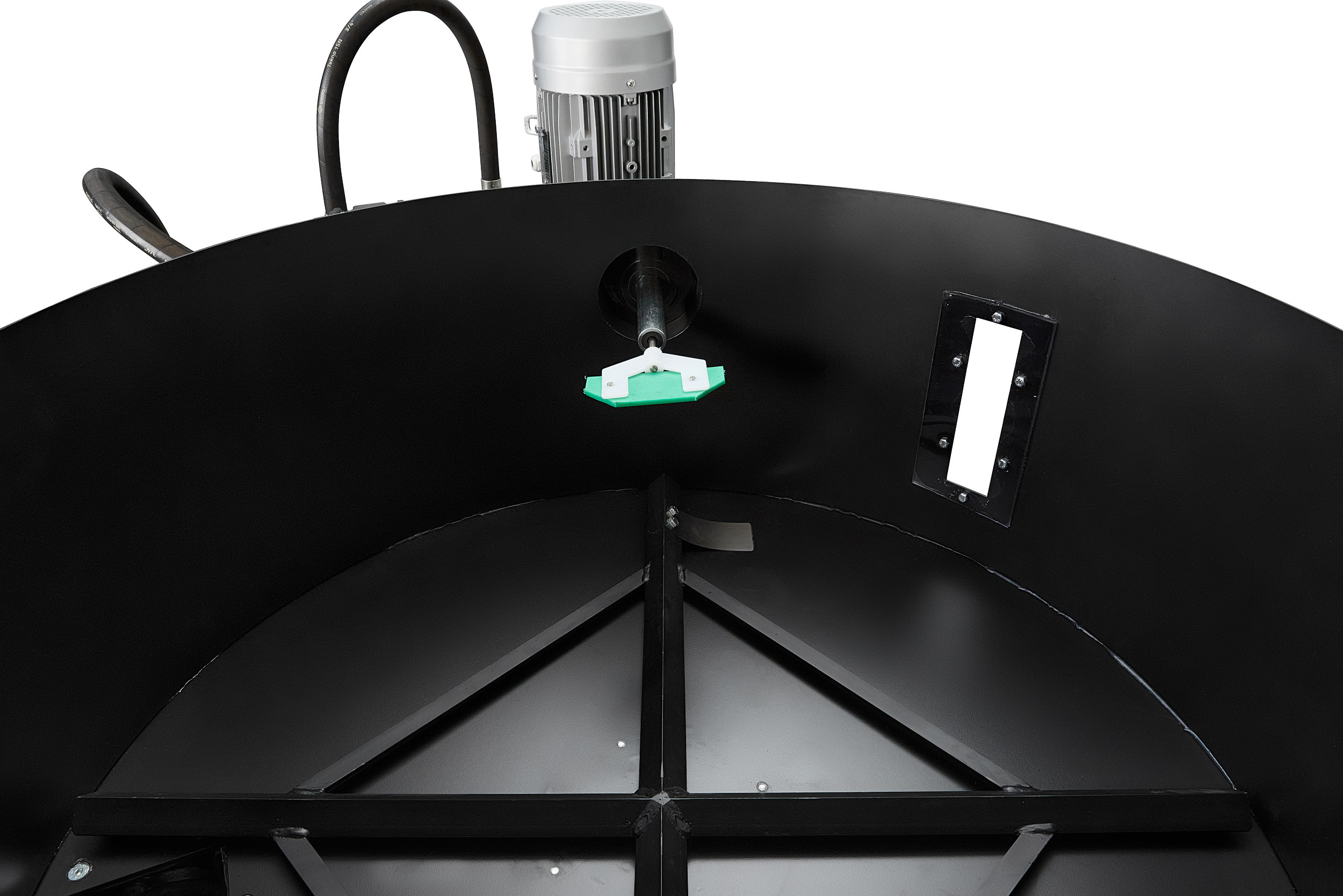
The Impact D1 is our leather buffing dust compactor. It reduces the volume of dust to make handling and transport easier.
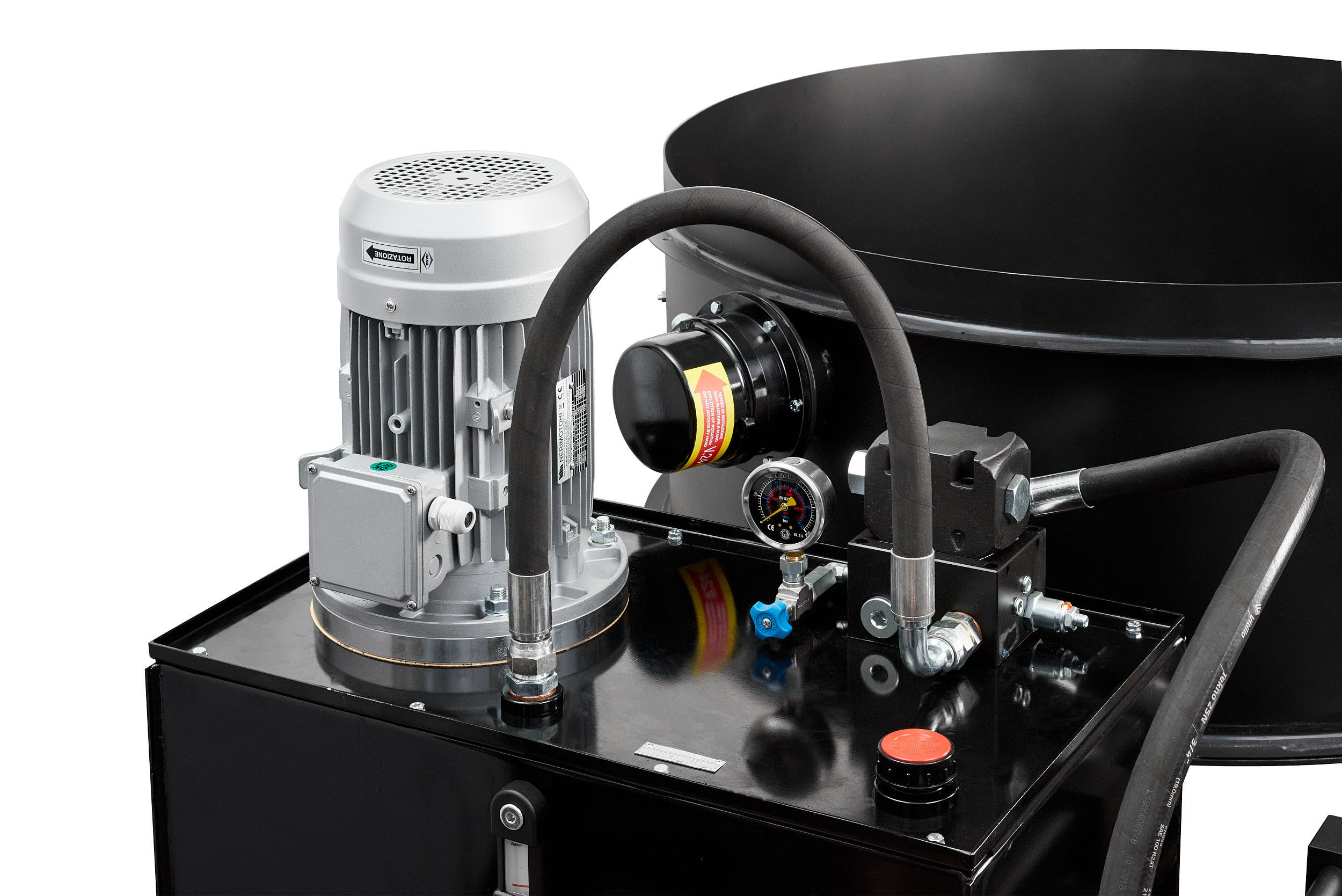
The standard version combines robust mechanics, a large-capacity hydraulic unit and a level sensor that controls operation when material is present for compaction.
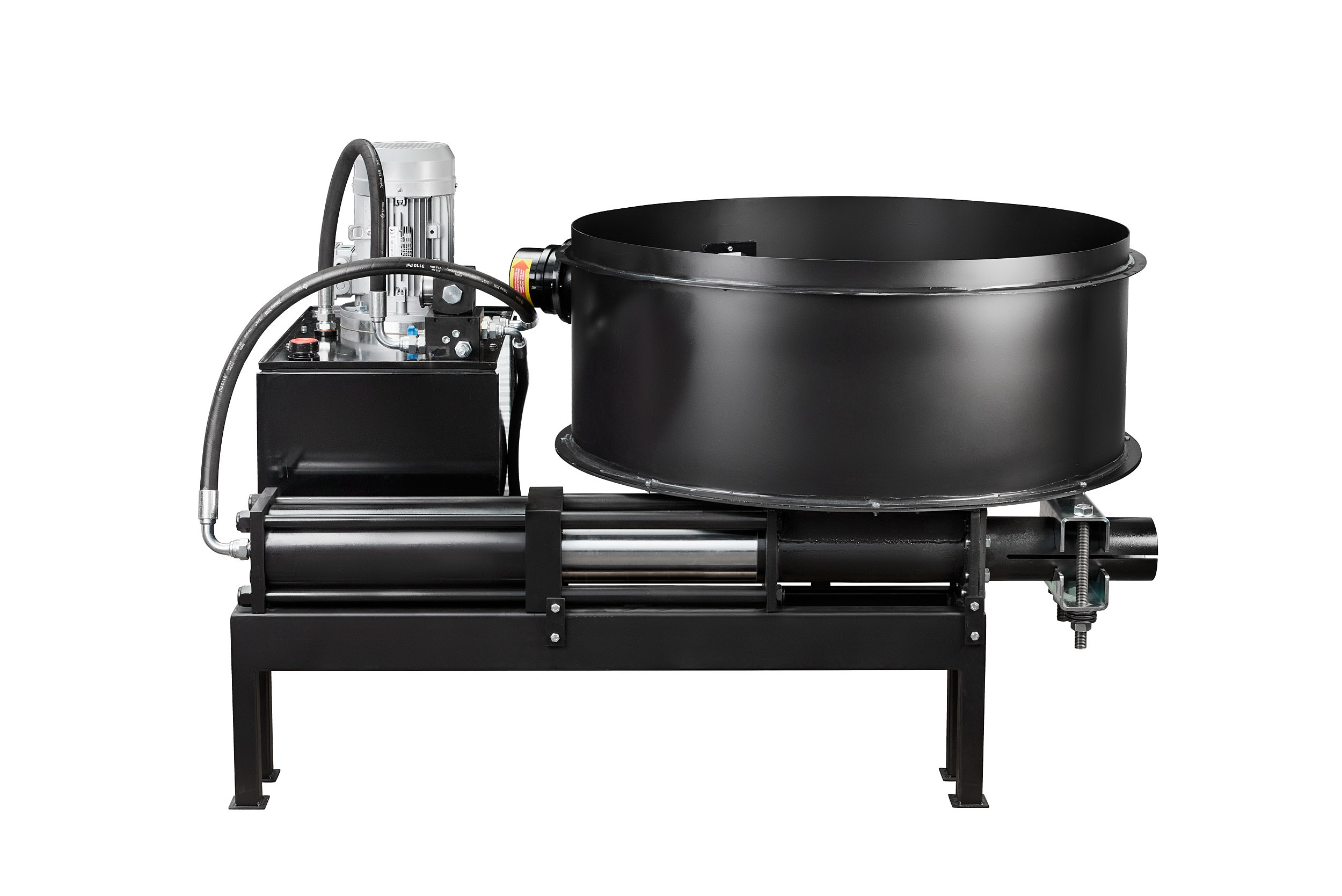
Our approach: properly sized hydraulics, simple controls and mechanics designed to last.
Practical engineering for tannery work
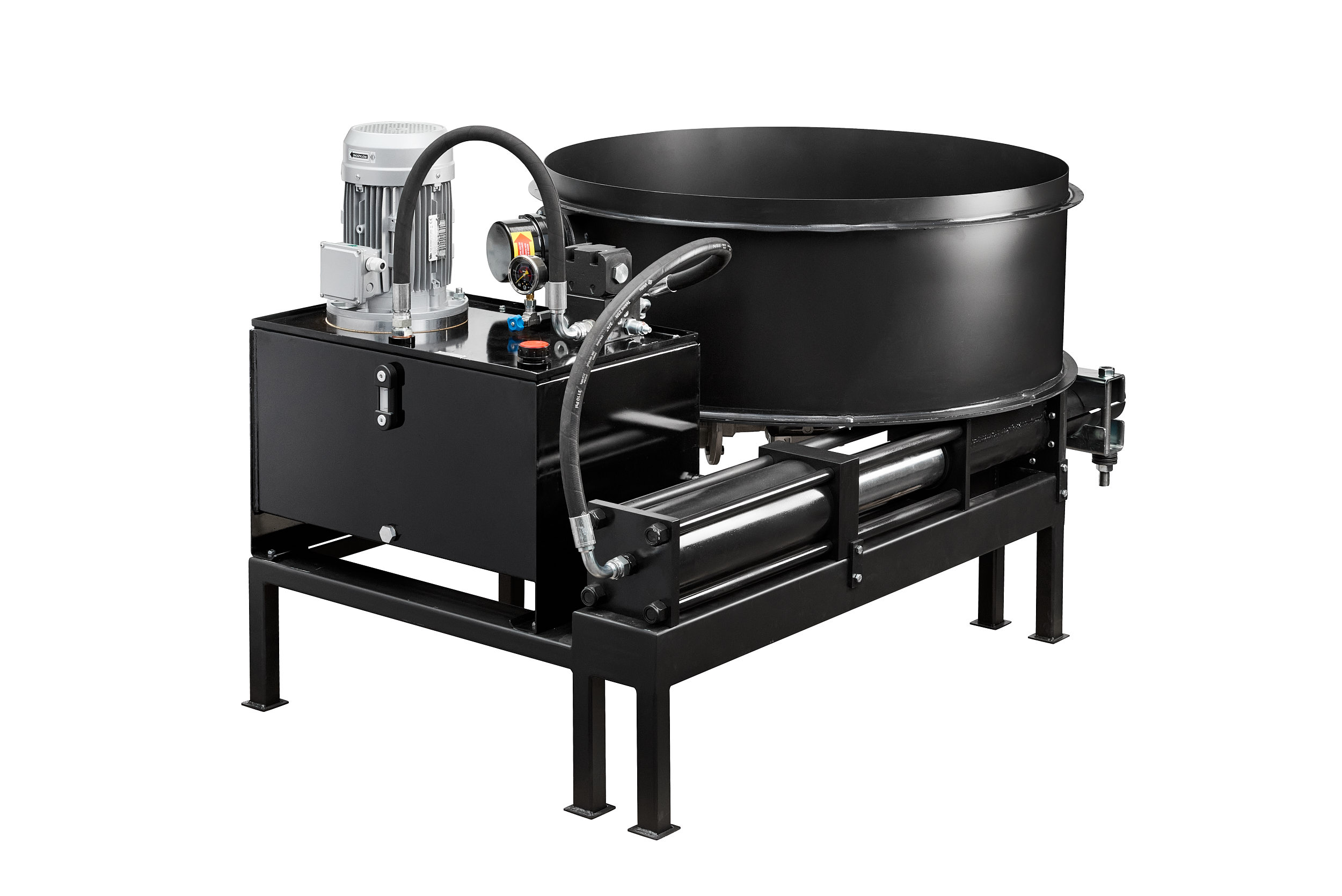
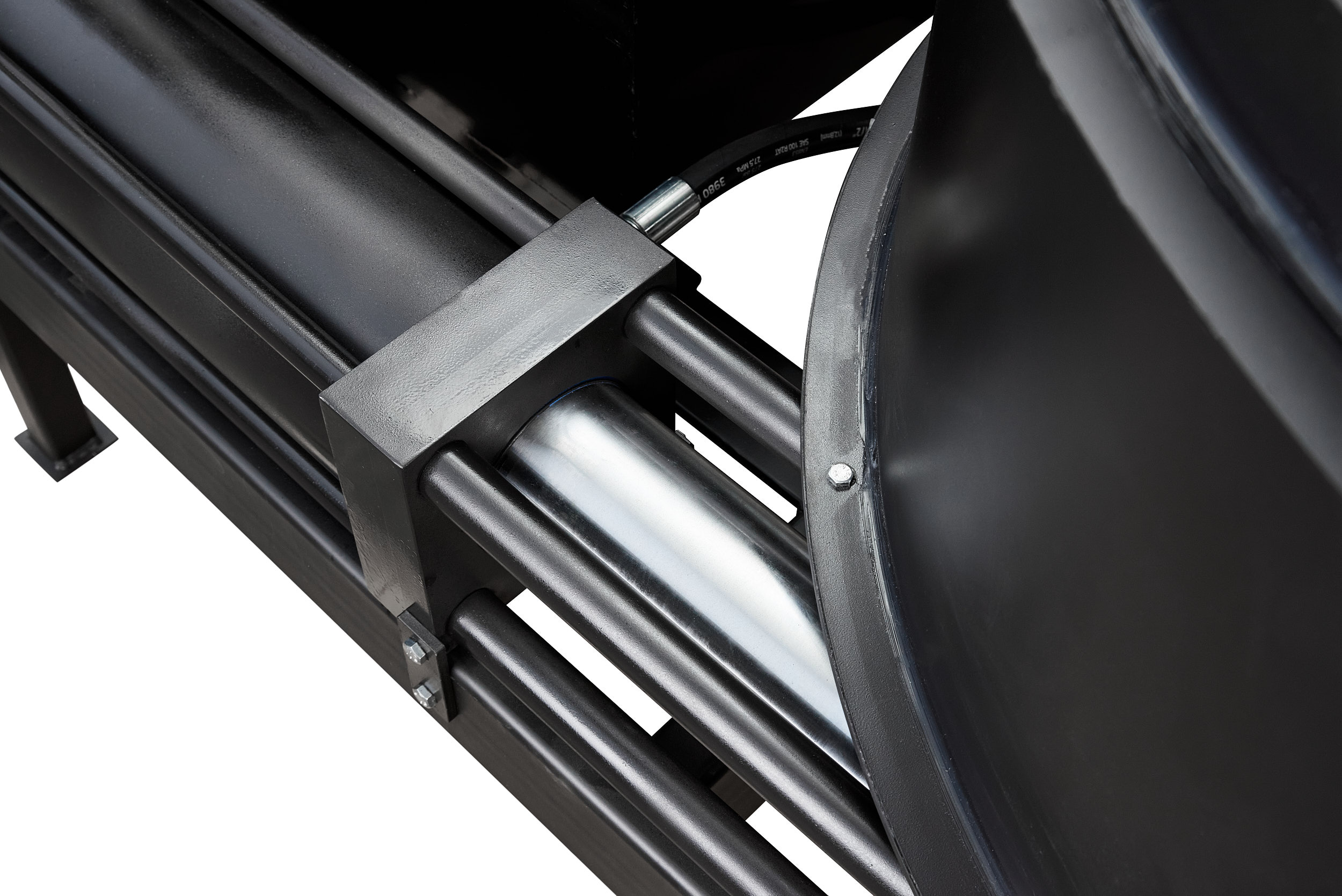
A 130 mm compaction piston
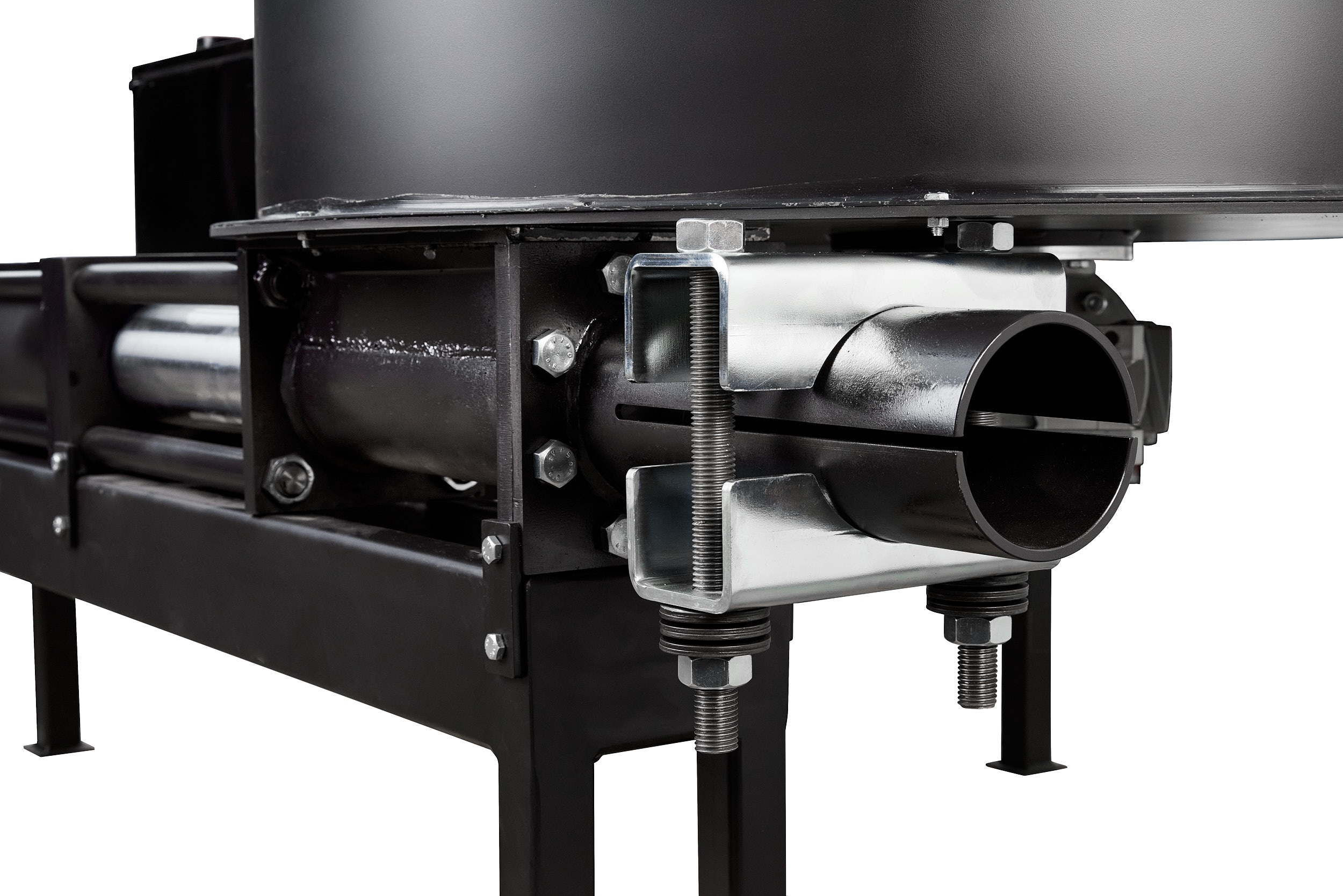
We favour simple, robust construction. The compaction piston has a diameter of 130 mm; the custom mechanical parts are designed and manufactured to our specifications.
Limiting oil temperature rise
The large-capacity hydraulic unit and controlled operating pace help limit oil temperature rise. Provision for forced cooling allows a heat exchanger to be connected as required.
Straightforward operation
The standard version uses an electromechanical control panel with timers, without a PLC or touchscreen. The level sensor allows the machine to operate when material is present.
Impact D1 technical specifications
| Stated maximum output | Up to 1 m³/h |
|---|---|
| Compaction piston diameter | 130 mm |
| Dimensions, including tank | 1,200 × 1,000 × 1,300 (H) mm |
| Dry weight | 350 kg |
| Level monitoring — standard version | Material detection sensor |
| Additional cooling | Provision for forced cooling |
Contact our team to confirm the configuration and performance suited to your material and installation.
Hydraulics designed with durability in mind
The hydraulic design aims for a controlled operating pace while maintaining the intended compaction capacity. The objective is to limit oil temperature rise and stress on the seals.
Our priorities are durability, straightforward operation and ease of maintenance.
Impact D1 or Impact D1 ECO?
Both versions share the same mechanical and hydraulic base. The difference lies in the controls and how starting is managed.
Scroll the table horizontally to compare the two versions.
| Feature | Standard Impact D1 | Impact D1 ECO |
|---|---|---|
| Mechanics and hydraulics | Reference Impact D1 base | Same base as the standard version |
| Level monitoring | Level sensor | Visual check through a sight glass, without a sensor |
| Operating control | Control panel | ON/OFF switch, without the standard version’s panel |
| Starting | According to material detected by the sensor | At the operator’s discretion |
| Intended use | Operation controlled by the presence of material | Occasional use and lower production volumes |
On the ECO, the operator checks the level through the sight glass and uses the switch when there is enough dust for compaction.
See the Impact D1 in our workshop
Our team presents the hydraulic system, electrical controls and mechanical construction. The machine shown is the standard version with a control panel.
If the player does not appear, check your external-content preferences or use the YouTube link.
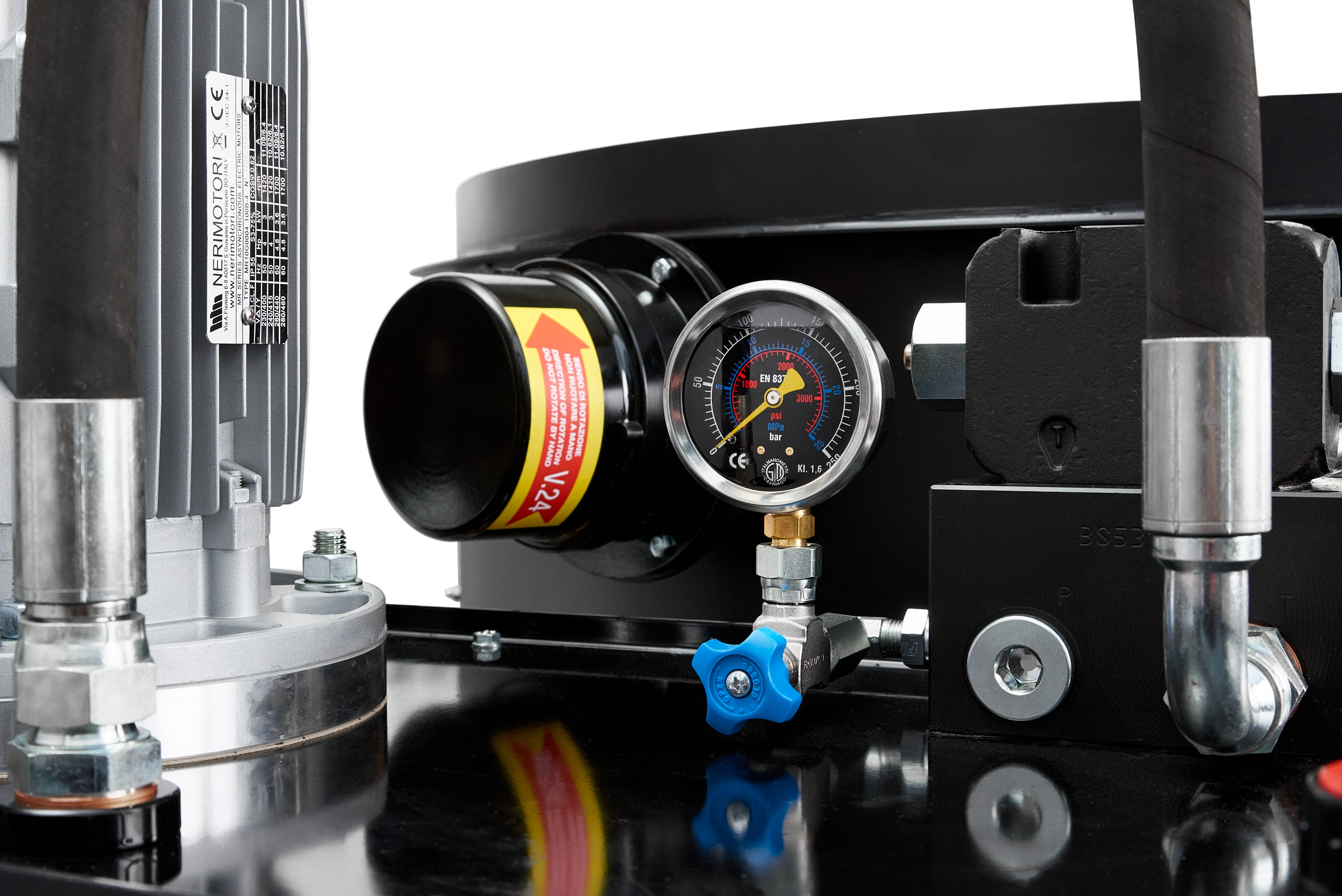
The Impact D1 range in pictures
Views of the machine and its equipment, with the ECO photographs identified. Click a photograph to enlarge.