
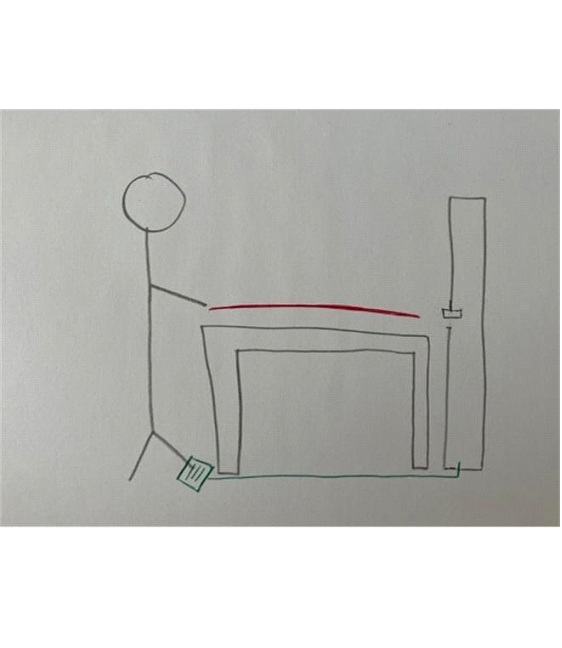
A customer working with very rigid leather panels came to us with a specific request: to guide the material across a table and operate the marking hammer while standing on the opposite side. To explain the layout, the customer sent us a small hand-drawn sketch. That drawing was the starting point for our work.
Understanding the process before building the solution
The sketch placed the operator on one side of the table, the leather on the worktop and the marking hammer on the other side. The foot control needed to be positioned close to the operator. The task was to adapt the arrangement to the way those rigid panels had to be handled.
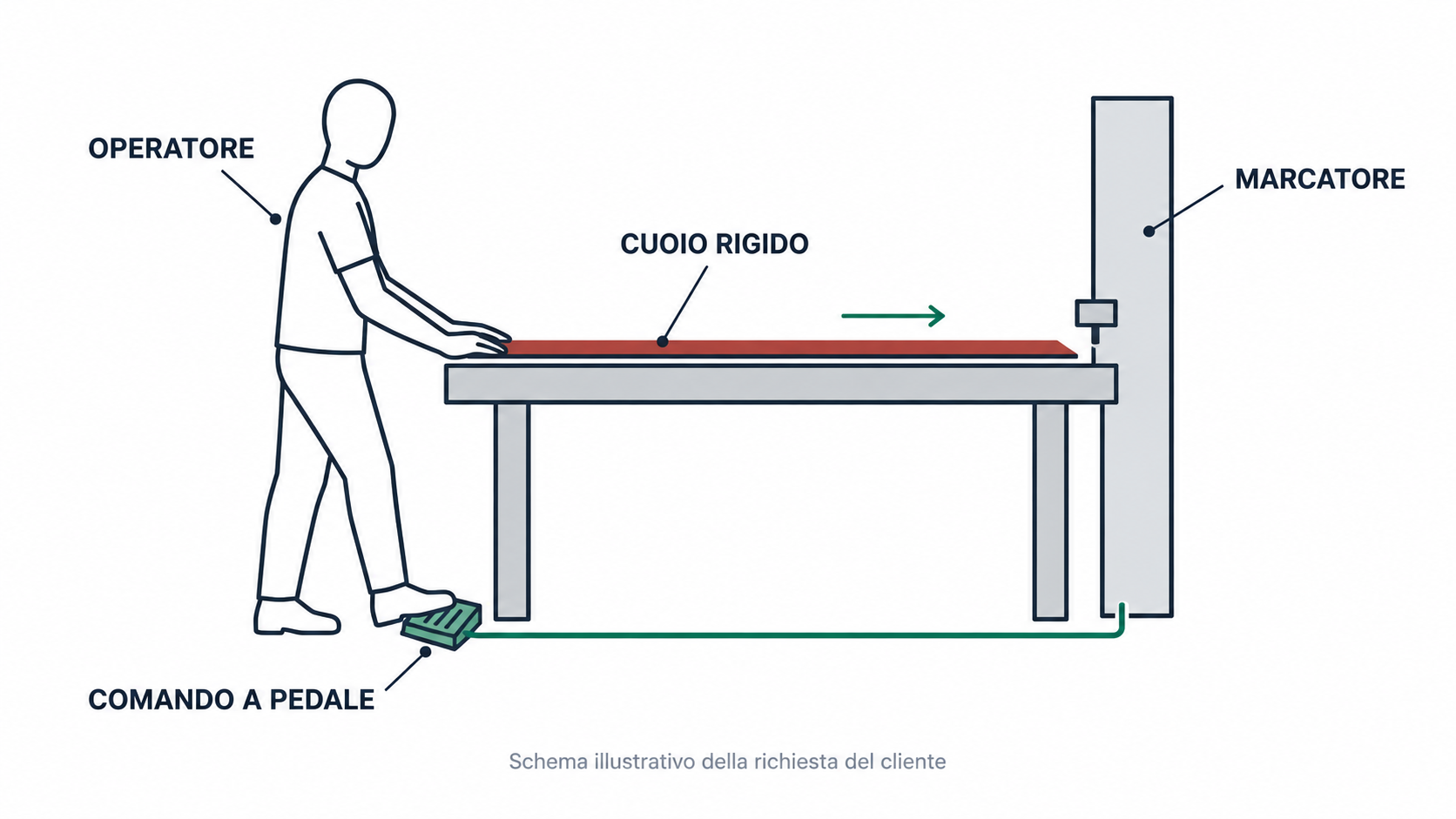
Starting from the customer’s sketch, we prepared a second diagram to clarify the requested layout: the operator and pedal on one side, the leather on the table and the D4 on the opposite side. This illustration helped us share the requirements before building the application.
Our starting point: the D4
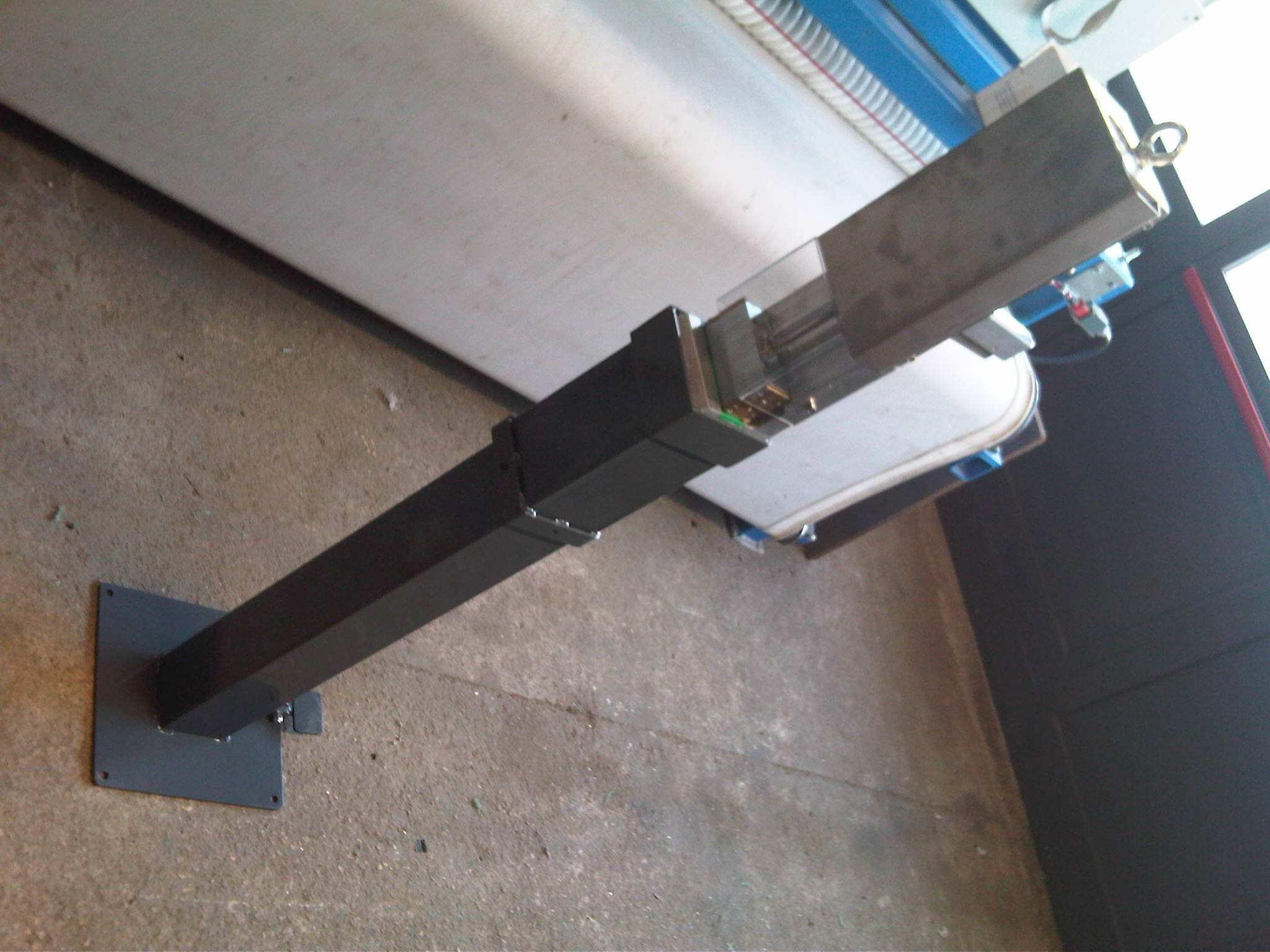
We based the application on our Danese D4 pneumatic marking hammer, an existing product in our range. We adapted its application to the customer’s request: this is a customised D4 application, rather than the launch of a new hammer model.
From sketch to working application
Listening, understanding the material and drawing on our mechanical experience enabled us to turn the request into a practical application within a short time. We prepared an English-language video to show the customer the solution and remotely operated marking.
Choose how to view the solution
Watch the short — 29 seconds, English
Watch the full video — 1 min 14 sec, English
Considering number changes too
We also considered the operations involved in everyday use. The final part of the video shows the provision for disabling the remote control before working on the hammer, for example when changing the numbers.
Tailored solutions begin with listening
We take pride in turning a customer’s request into a practical solution by adapting one of our products to their process. Sometimes it starts with a simple drawing: our role is to understand it and assess how to make it work.